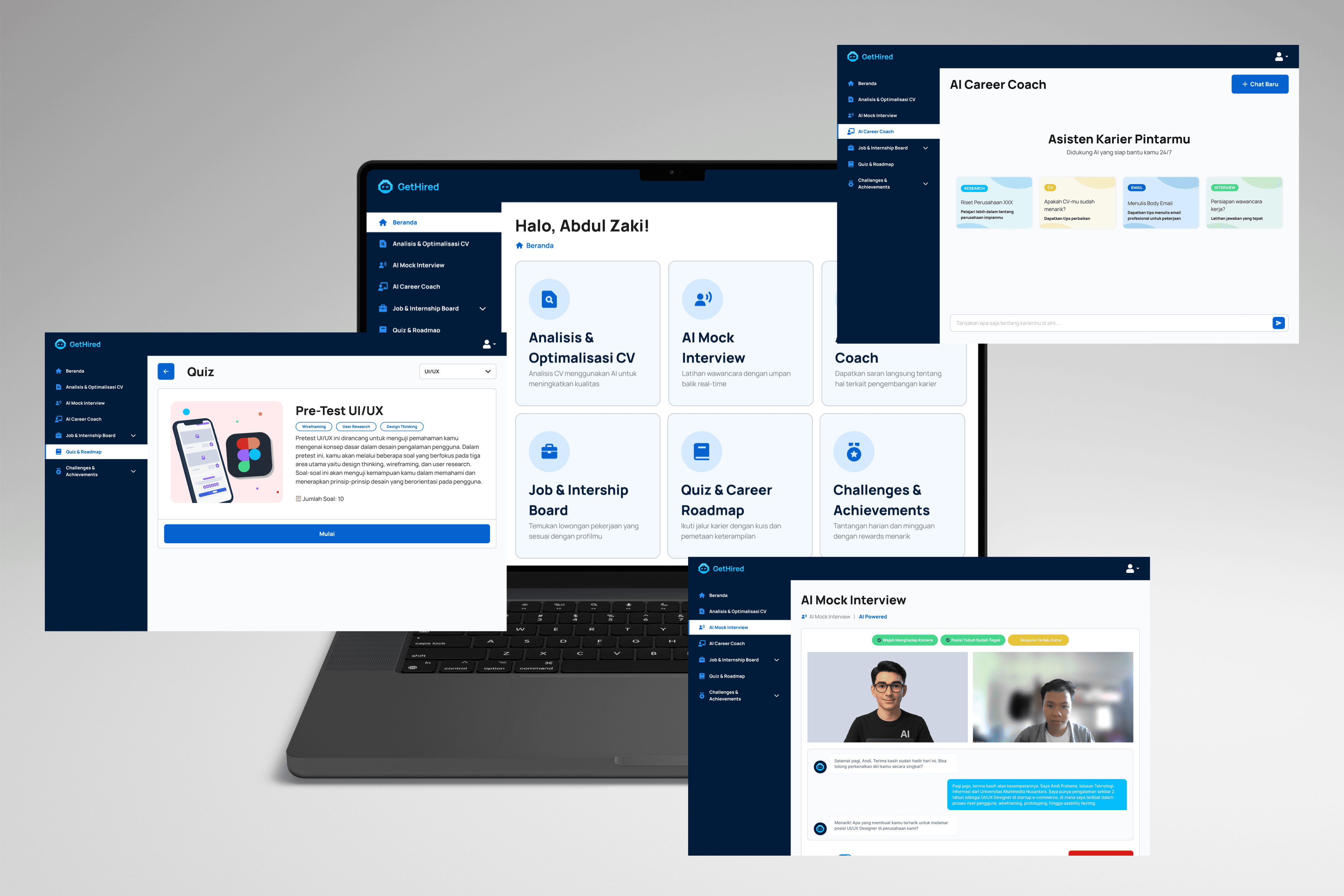
UI/UX Design (Competition)
METHOD/
FRAMEWORK
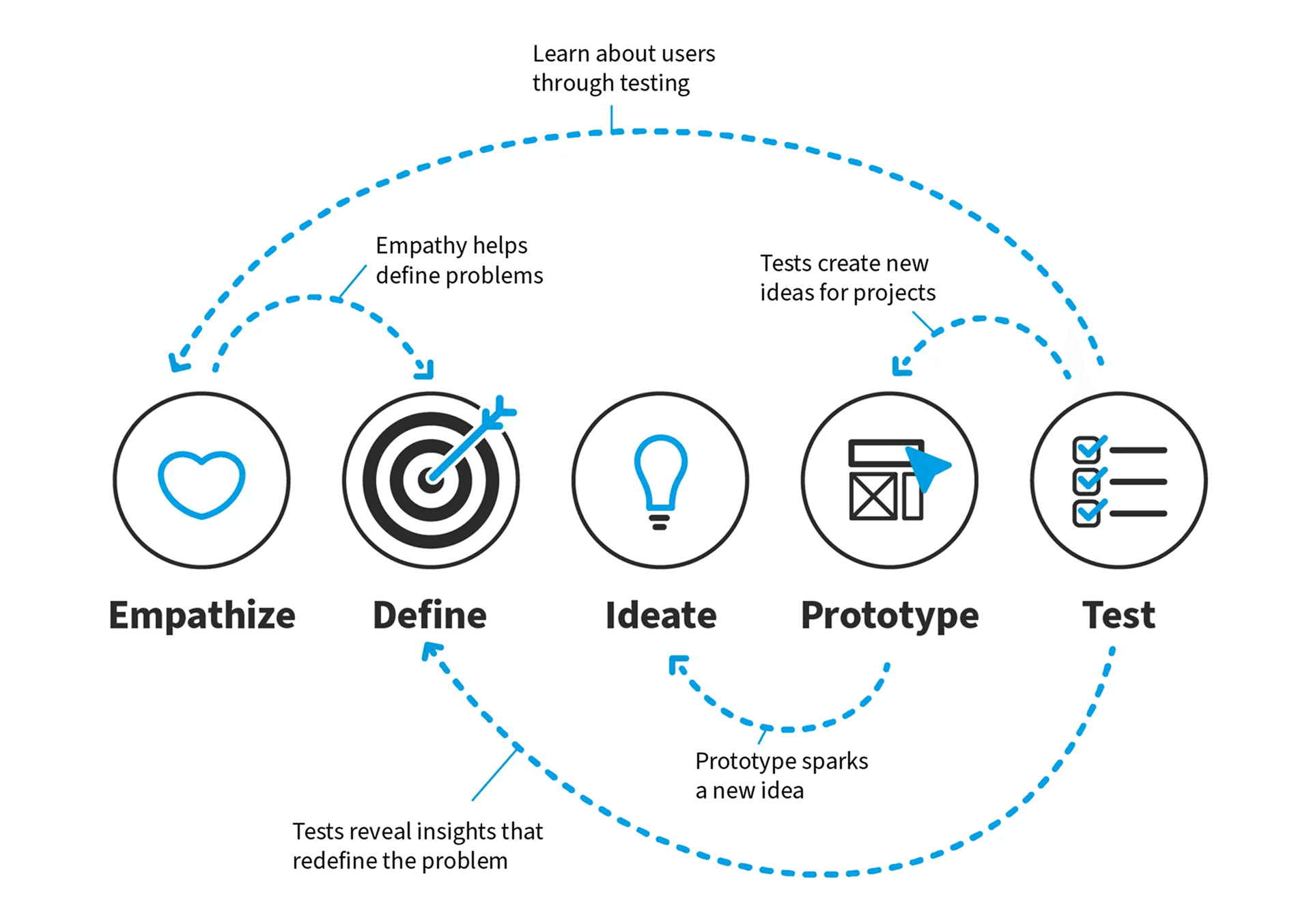
Using Design Thinking to shape meaningful experiences
Design Thinking was chosen to ensure the solution stays human-centered, solving real user needs through iterative problem-solving. This method helped us empathize with job seekers, define clear pain points, ideate meaningful features, and test solutions effectively. By focusing on user perspectives at every stage, we aimed to build a product that is not only functional but truly impactful.
NEXT
STEPS
Define
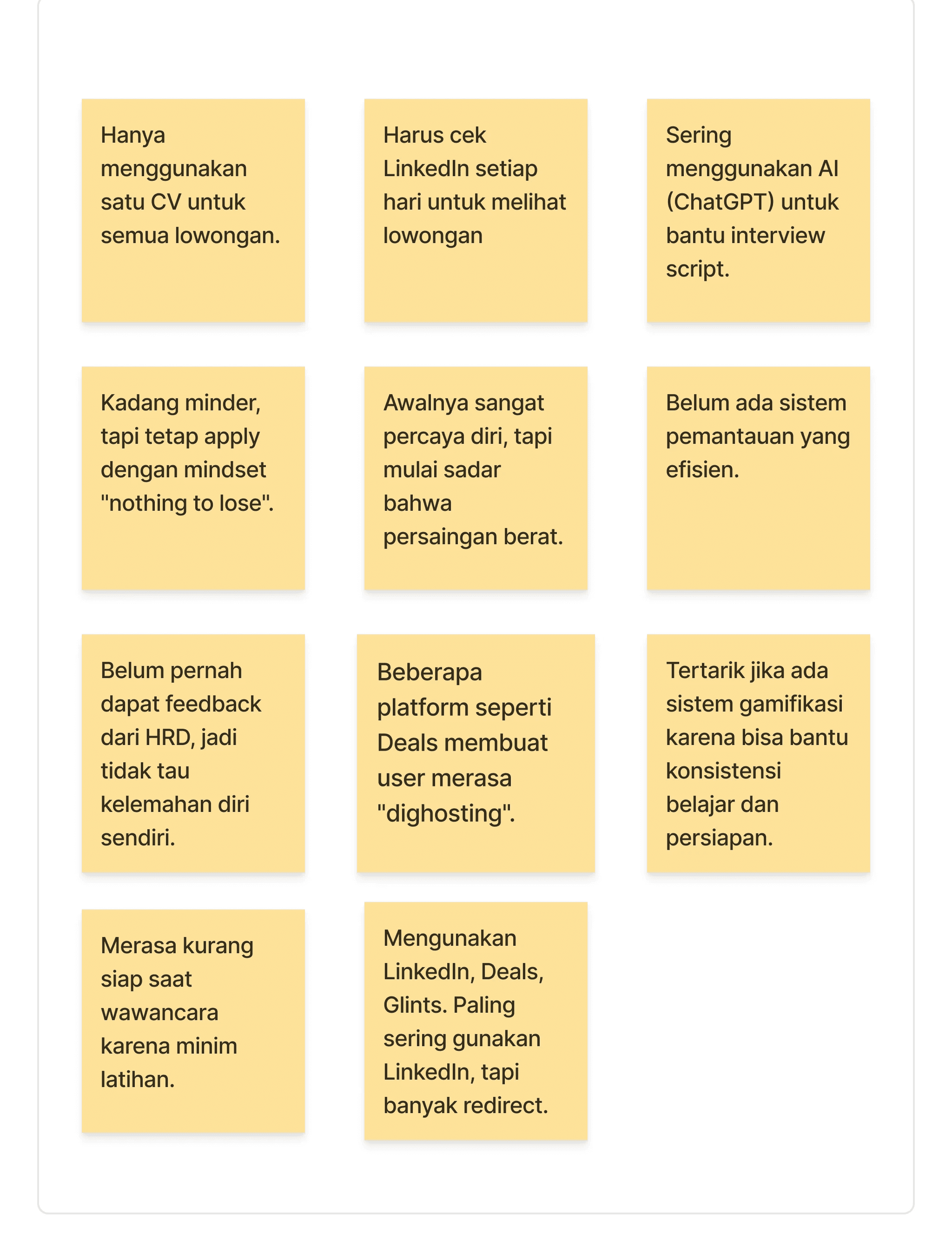
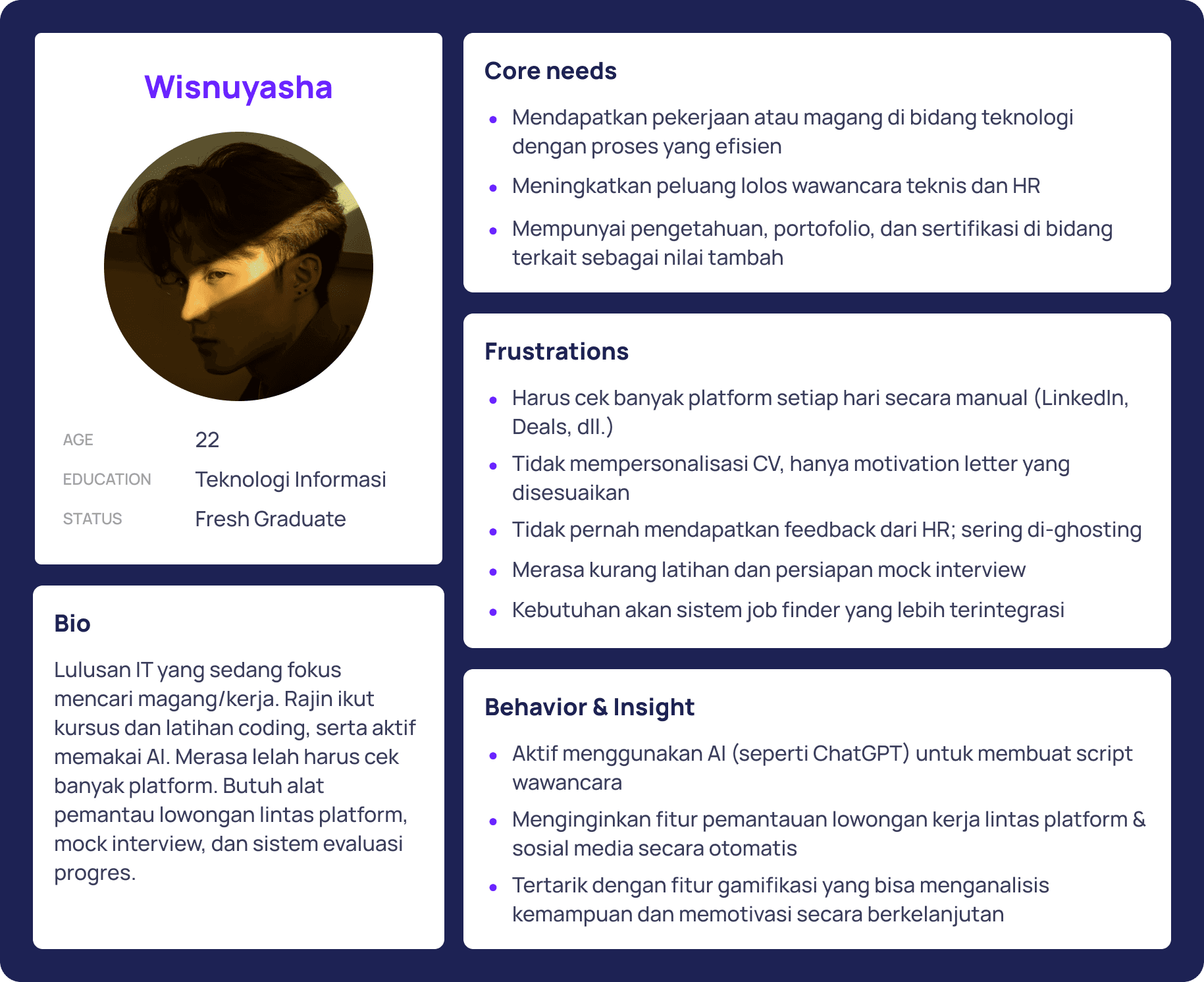
After mapping out the pain points gathered during the interview phase, we moved forward by creating an User Persona open_in_new to represent our target audience more clearly and empathetically. This helped us humanize the data and keep user needs at the center of every design decision.
To organize and make sense of the pain points, we developed an Affinity Diagram open_in_new grouping similar challenges and uncovering key themes. This step clarified which issues were most pressing and revealed potential areas of opportunity.
With clearer patterns in hand, we crafted a focused problem statement to guide the next stages. We then translated this into several How Might We (HMW) questions, setting the stage for ideation by opening up possibilities for a broad range of creative, user-centered solutions.
DEVELOPING
SOLUTIONS
Ideate
In the ideation phase, we began answering the How Might We questions by proposing six key features aimed at solving the identified user pain points. These solutions included: AI Career Coach (Virtual Career Chatbot Assistant), Mock Interview AI with real-time Feedback, AI-powered CV Analysis & Optimization, Career Roadmap & Quiz, Challenges & Achievements with Gamification, and Integrated Job Board & Internship Finder. Each feature was crafted to support Gen Z users through every step of their job-seeking journey.
Once the core features were defined, we moved on to mapping out the User Flow open_in_new, ensuring a seamless journey from onboarding to goal completion. This was followed by creating an Information Architecture open_in_new, to organize the app’s structure and content in a logical and intuitive way.
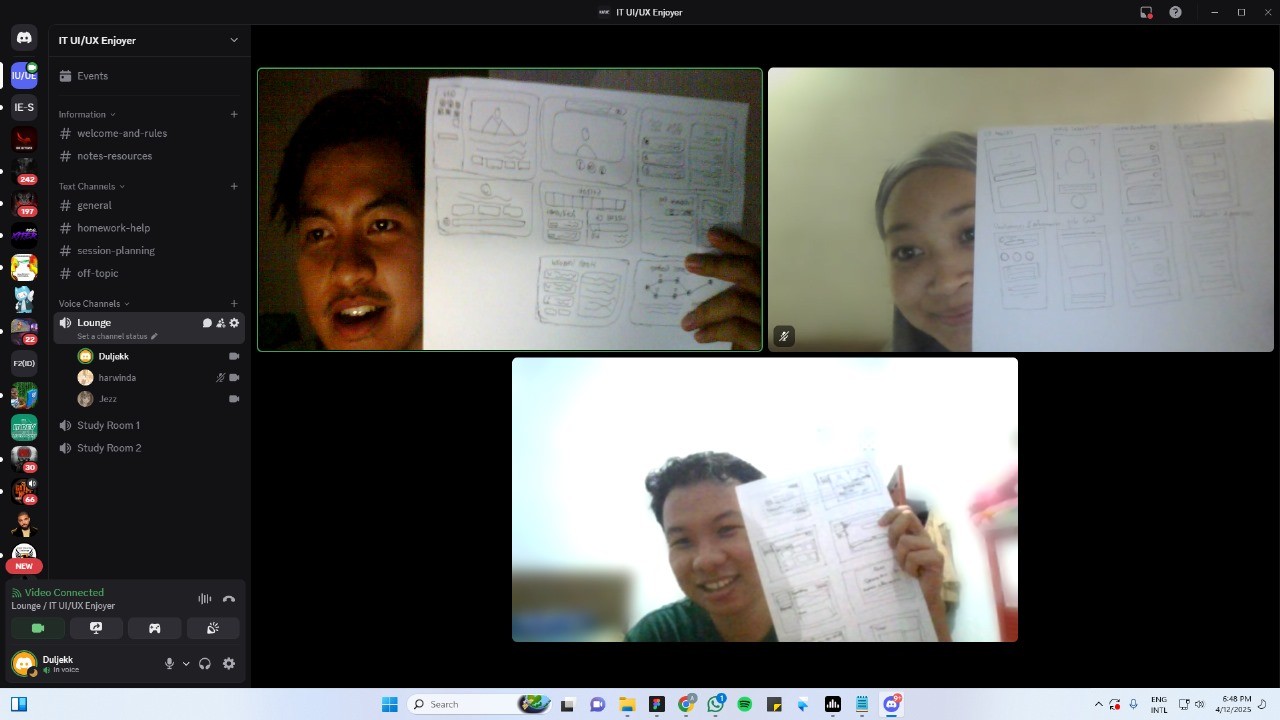
To conclude the ideation phase, we translated our concepts into quick wireframe sketches using the Crazy 8 open_in_new method. Each sketch was then analyzed and broken down to identify strengths, usability, and alignment with user needs. After thorough evaluation, we selected the most effective ideas to bring forward into the prototyping phase.